Carolina Horse Park Welcomes Helen Murray as Director of Programs and Committee Development
The Carolina Horse Park Foundation is pleased to welcome Helen Murray as our new Director of Programs and Committee Development.
Long before cross-country courses stretched across rolling fields and spectators gathered to watch horses compete, the property now known as Carolina Horse Park was a working farm built through grit, family, and generations of hard work.
Its story begins nearly a century ago.
New Beginnings
In the early 1930s, the Calloway family moved from the Pilot Mountain area of North Carolina in search of opportunity. Like many families of that era, they were drawn to land that promised stability, work, and the chance to build something lasting.
Lawrence Calloway helps to share the story on behalf of his father, Shelby Calloway, who was born on the farm in 1938 as one half of a set of twins so small at birth they were placed in a shoebox to sleep.
“They were tiny,” Lawrence recalls. “Dad weighed about a pound and a half, and his twin sister about two pounds. They started in a shoebox, then eventually moved into a dresser drawer. It’s amazing to think about now.”
At the time, the land was already cleared and ready to farm, though the roads were still dirt and the work ahead was immense.
Everything depended on the land.
Life on the Farm
Farming in those early years required strength, patience, and teamwork. The Calloway family farmed tobacco, cotton, and corn, with tobacco serving as the primary cash crop. Soybeans came later.
All of it was done by hand.
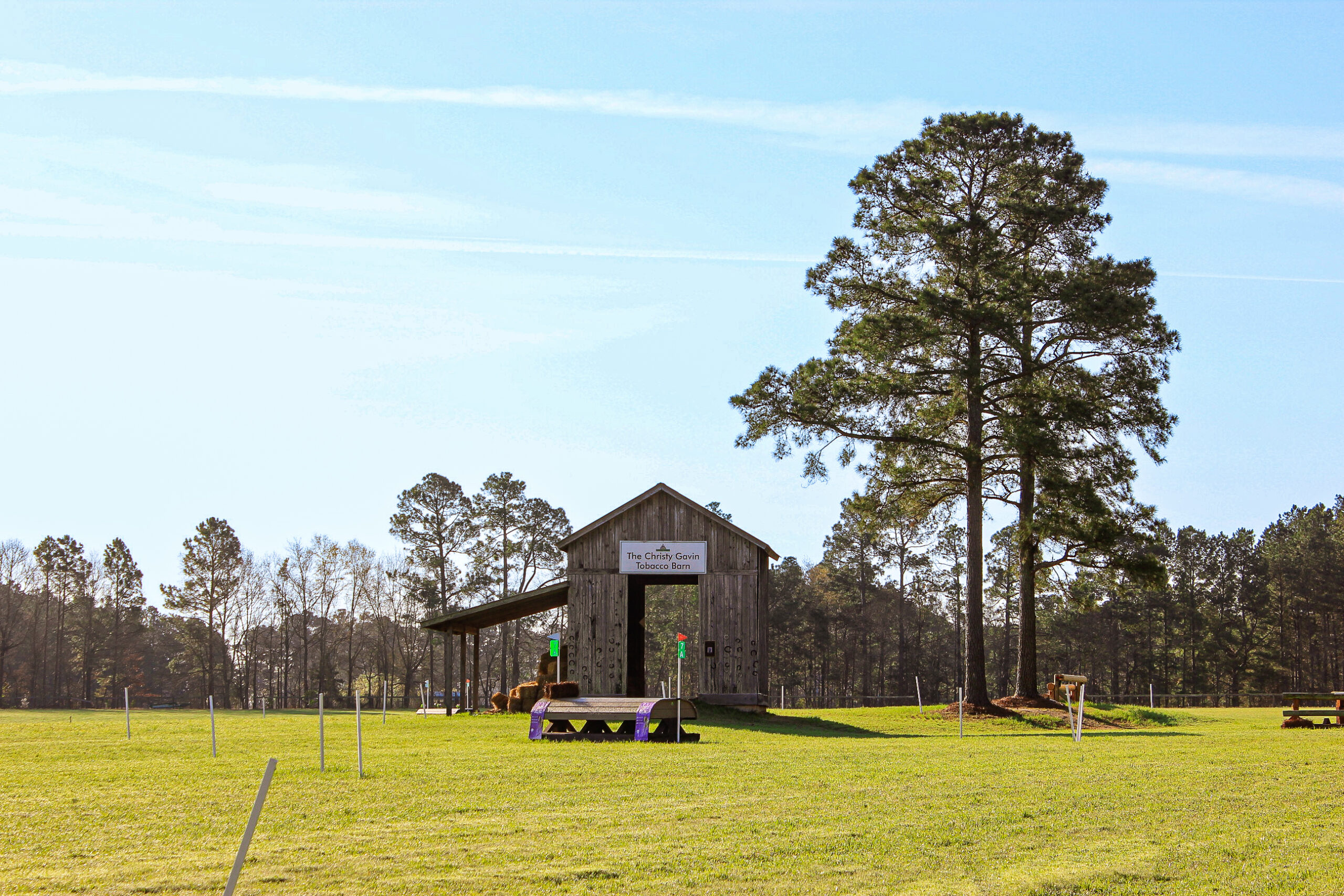
“There were five tobacco barns,” Lawrence explains. “One of them is still standing on the property today. It was a stick tobacco barn. We used to hang tobacco in there to cure.”
The farm was more than fields. It was a small community.
Tenant houses, one of which is the current staff office, were scattered across the land and were home to families who worked alongside the Calloways. Among them were Lumbee Indian families, including the Locklears and the Pates, who lived and worked on the farm.
Life was simple but far from easy.
Water came from hand pumps. Restrooms were located outdoors. Winters were cold, summers were hot, and the work never stopped.
When Shelby Calloway was just eight years old, his father passed away. From that moment forward, his mother, Maude Calloway, carried the responsibility of running the farm while raising her children and farming more than 400 acres.
She also ran a small country store in Five Points.
“That little white building there at Five Points was her store,” Lawrence says. “She sold everything. Gas, sandwiches, clothes, blue jeans, overalls. People didn’t always have money, so she would write their name in a book, and they would pay when the crops came in.”
It was a system built on trust, community, and determination.
A Landscape Full of Life
The land itself shaped daily life.
Ponds were dug to support the farm and became gathering places where children learned to swim and families spent time together after Sunday church.
“I learned to swim in that pond,” Lawrence remembers. “After church on Sunday afternoons in the summer, we would go down there, ten or twelve of us, and spend the afternoon swimming.”
Wildlife moved through the property just as it does today. Fox squirrels ran through the trees. Beavers shaped parts of the wetlands and ponds. Even now, Lawrence walks the land regularly and continues to appreciate the natural beauty that remains.
“It’s absolutely beautiful land,” he says. “Those hills are something special.”
The Turning Point
Like many multi-generational farms, the land eventually faced change.
When Maude Calloway passed away, ownership of the farm was divided among siblings. Over time, portions were sold, often in small shares.
Around the same time, the historic Stonybrook Steeplechase in Southern Pines was searching for a new home.
Eventually, land from the Calloway farm, along with surrounding parcels, was purchased to create what would become Carolina Horse Park.
Shelby Calloway was among the last family members to sell his portion of the land. He stopped farming in the 1980s but remained deeply connected to the property.
Even today, the family retains a small portion of land nearby.
A Future That Could Have Looked Very Different
When asked how he feels about the land today, Shelby’s answer is immediate and heartfelt.
“We just didn’t want it to turn into a housing development,” he says.
Across Moore and Hoke Counties, farmland has steadily disappeared and been replaced by neighborhoods and commercial development. Without conservation, this land could have followed the same path.
Instead, it became something lasting.
“You guys have made it absolutely beautiful,” Lawrence says. “It was a beautiful farm to start with, but what it’s become now, especially back there in the cross-country, it’s incredible.”
He pauses before adding:
“I know my grandmother would be proud of how it looks today. She took great pride in this place.”
From Farmland to Horse Park
Today, Carolina Horse Park carries forward the legacy of the land by building on its history and supporting conservation of open space.
Where tobacco once cured in barns, horses now train and compete.
Where tenant houses once stood, riders and spectators gather.
Where dirt roads once connected families, trails and courses now wind through conserved landscapes.
Events now bring people together from across the region not just for equestrian sport, but for community gatherings, 5K/10K races, dog events, and outdoor recreation.
Through ongoing conservation efforts, the land remains remarkably intact.
“That’s a blessing to me,” Lawrence says. “It’s amazing that you’ve kept it the way it is.”
Why Land Conservation Matters
The story of Carolina Horse Park is not just about horses. It is about conservation.
It is about protecting open land in a region where growth continues at a rapid pace.
It is about ensuring that future generations can walk fields, watch wildlife, and experience the same rolling landscape that supported families nearly 100 years ago.
Without conservation, this land could have been lost to development.
Instead, it remains a place where history, nature, and community coexist.
Honoring the Past and Supporting Conservation
Today, when visitors walk across the Carolina Horse Park grounds, they are walking on land shaped by generations of farmers, families, and workers who depended on the soil beneath their feet.
Their legacy lives on in quiet ways. In the remaining tobacco barns. In the ponds dug years ago. In the road that still bears the Calloway name and in the land itself.
Carolina Horse Park stands today not just as a destination, but as a commitment to conservation. This land, once farmed by hand and protected through generations, continues to remain open, beautiful, and cared for through responsible stewardship.
Because conservation is not just about protecting acreage. It is about protecting stories, and this land still has many stories left to tell.
The Carolina Horse Park is a 501(c)(3) charitable Nonprofit Corporation located in the Sandhills of North Carolina. Dedicated to conserving open space and providing a world-class venue for sport, the Park hosts a diverse calendar of national and international competitions while remaining deeply rooted in community, education, and access for all.
The Carolina Horse Park Foundation is pleased to welcome Helen Murray as our new Director of Programs and Committee Development.
The Carolina Horse Park Foundation is pleased to welcome five new members to its Board of Directors, bringing a wealth of equine and professional experience, passion, and commitment to the future of the Park.










We use cookies to improve your experience on this website. You may choose which types of cookies to allow and change your preferences at any time. Disabling cookies may impact your experience on this website. You can learn more by viewing our Cookie Policy.